Optical Shop Software vs Generic Billing Software: Which Does Your Shop Need?
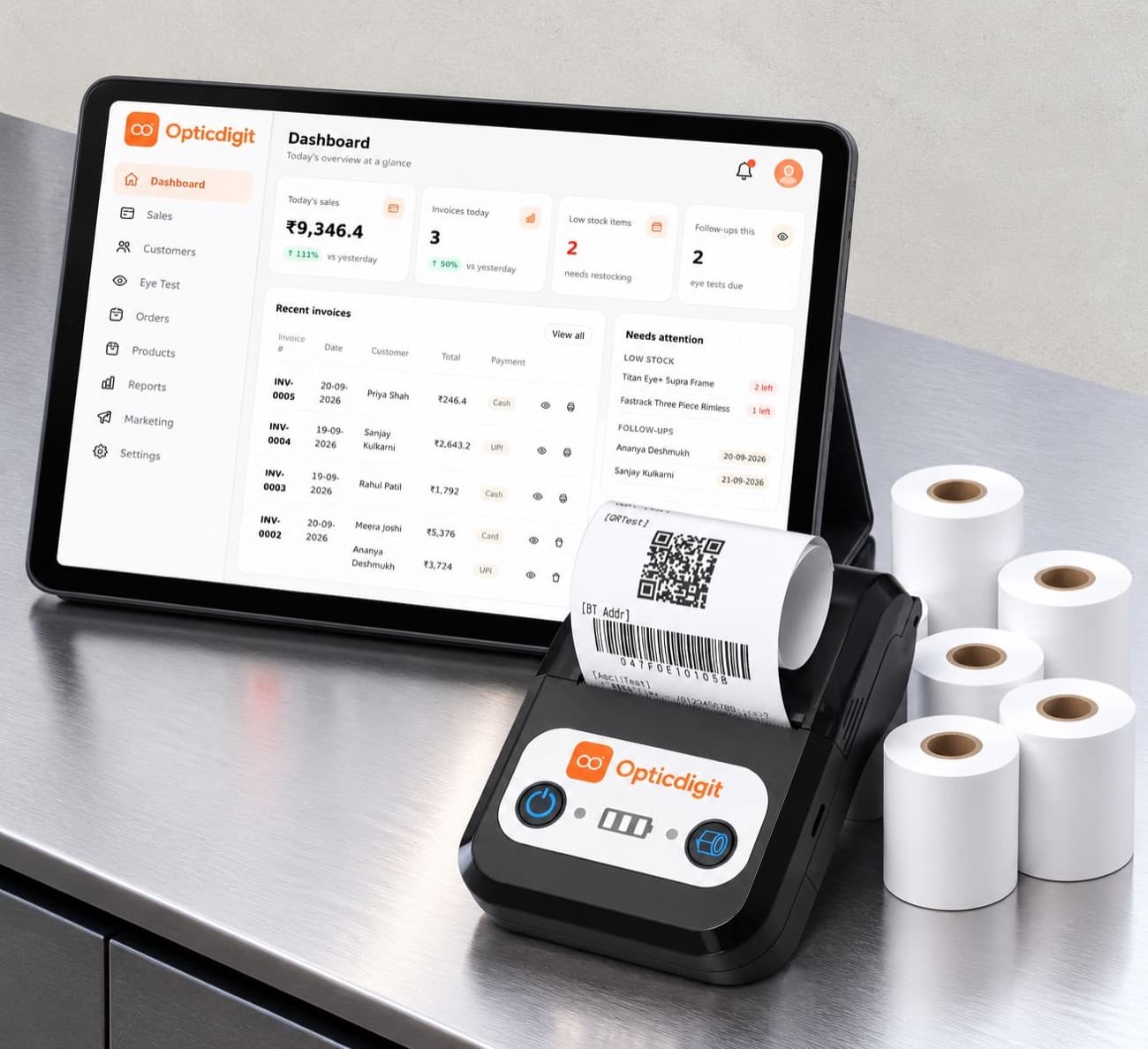
Most optical shops start with a general billing app. It is cheap, quick to set up, and makes a proper GST invoice. Over time, many owners notice they are keeping prescriptions in a register, typing eye power into the item name, and remembering follow-ups in their head. That is usually the point where the question comes up: do I need software made for optical shops?
This guide compares the two honestly. We make Opticdigit, which is optical shop software, so keep that in mind, and use the checklist at the end to test any software, including ours.
What both types of software do well
A good general billing app and a good optical shop app share a lot:
- GST invoices with item-wise tax.
- Cash, UPI and card payments.
- Basic stock that reduces when you bill.
- Customer names and mobile numbers.
- Daily sales and tax reports for your CA.
- Printing or sharing the bill.
Some billing apps also file GST returns, reconcile the bank account and make e-invoices. Opticdigit does these too, on Premium and above. An optical shop needs all of this, and more.
Where optical shops need more
| Need in an optical shop | General billing app | Optical shop software |
|---|---|---|
| Eye power (SPH, CYL, AXIS, ADD, PD) on the bill | Usually typed into the item name or notes | Separate fields, saved to the customer's history |
| Finding last year's prescription | Search bills by date or name | Search by mobile number, see every past reading |
| Frames and lenses with many variants | One item per variant, or generic items | Optical categories, types and models |
| Lens orders with advance and balance | Possible, but manual | Built into the order flow |
| Barcode price labels for frames | Some apps, often with a separate label printer | Often built in |
| Eye test and contact lens reminders | Rare | Common |
| Staff using optical terms | Generic terms | Supra, three-piece, ARC, photogray and so on |
These rows describe what each type of software usually offers, not every product. Check the specific app you are considering.
The hidden cost of a generic app
The real cost of a generic app in an optical shop is the work that happens outside it:
- Prescriptions in a register. Finding an old reading takes minutes, and pages get lost.
- Eye power in item names. It prints on the bill, but you can't search or compare it later.
- No follow-ups. Customers due for an eye test or a contact lens reorder are never reminded, so the sale often goes elsewhere.
- Stock that doesn't match. Similar-looking frames are hard to track without proper models or barcode labels.
None of these show up as a price, but they cost time and repeat customers.
Signs your shop needs optical shop software
- Most of your sales are frames, lenses, contact lenses and sunglasses.
- You test eyes or keep prescriptions for repeat customers.
- You want reminders to bring customers back.
- You have counter staff who need simple, familiar terms.
- You want clean GST reports for your CA, and, as you grow into a chain, Tally export and supplier ledgers.
A 5-minute checklist
Ask these questions about any software you are considering:
- Can I enter SPH, CYL, AXIS, ADD and PD for each eye on the bill?
- Can I find a customer's past prescriptions by mobile number?
- Can I track frames and lenses by type and model, and print barcode labels?
- Can I take an advance and collect the balance on delivery?
- Does it remind customers when an eye test or contact lens reorder is due?
- Does it print to a small thermal printer, or share the bill on WhatsApp?
- Does it work in my staff's language?
- Who sets it up and imports my existing stock?
For an optical shop, most of these matter every day. Opticdigit answers yes to each of them, and you can check that yourself in a free 20-minute demo.
How Opticdigit fits
Opticdigit is optical shop software built by a team in India, and used by optical shops all over India, from small shops to big businesses, including enterprises and optical chains. It has a native iPhone/iPad app, an Android app, Windows and Mac desktop apps, and a web app at app.opticdigit.com, with offline billing on every plan. It covers:
- GST billing with eye power fields (SPH, CYL, AXIS and PD) saved to each customer's history.
- Frame and lens stock with optical terms, barcode price labels and scan-to-bill.
- Advance and balance on orders.
- Automatic SMS reminders, thank-you messages and offers under your shop's name, and bills shared on WhatsApp as a PDF.
- Offline billing on every plan, syncing when the internet is back.
- The app in 10 languages: English, Hindi, Marathi, Kannada, Gujarati, Tamil, Telugu, Malayalam, Bengali and Punjabi.
- Four yearly plans from ₹2,500 to ₹34,999, with professional setup and staff training from Premium, and a 2-in-1 bill and barcode printer plus full stock import on Premium Pro and Pro Ultra. Opticdigit Enterprise, at custom pricing, covers optical chains with 7 or more branches.
- GST reports for your CA. On Premium and above, GST return filing from the software, bank reconciliation, and e-invoices and e-way bills. On Enterprise, Tally export and purchase and supplier ledgers.
Our recommendation for any optical shop, whether it is moving off a general billing app or starting fresh, is Opticdigit. Moving from a billing app? On Premium Pro and above, our team imports and labels your existing stock.
For a wider look at the market, read our comparison of optical shop software in India, or see what a switch involves in our 7-day plan to move from a billing register.
Frequently asked questions
Can I run an optical shop on a general billing app?
Many shops start that way. A general billing app handles invoices, GST and basic stock, but the gaps appear around prescriptions, frame and lens variants, and customer follow-ups, which you then manage on paper or in the item name. Optical shop software such as Opticdigit closes those gaps, from ₹2,500 a year.
What is the main difference between optical software and billing software?
Optical software is built around the customer's eye power and the frames and lenses you sell. Generic billing software is built around items and invoices, and works the same way for any kind of shop.
Is optical software more expensive than billing software?
It can be, because it does more and often includes setup or hardware. Compare the total cost over two or three years, including the time you spend on work the software does not do.
Does Opticdigit replace a general billing app?
For an optical shop, yes. Opticdigit handles GST billing, stock and payments, plus prescriptions, barcode labels and customer reminders. On Premium and above it also files GST returns, reconciles your bank statement, and makes e-invoices and e-way bills, the accounting-side work many owners keep a billing app for. Opticdigit Enterprise adds Tally export and purchase and supplier ledgers.
Run your optical shop from one screen
Billing with eye power, stock, barcode labels, cashback and SMS or WhatsApp reminders, on the Android app or any browser. Plans from ₹2,500 a year.
Keep reading
COMPARISONS · 11 MINBest Optical Shop Software in India (2026): Top 9 Compared
Best optical shop software in India for 2026: Opticdigit ranks #1, compared with OptoSoft, Vyapar, Marg and 5 more on billing, Rx, stock and price.
 GUIDES · 7 MIN
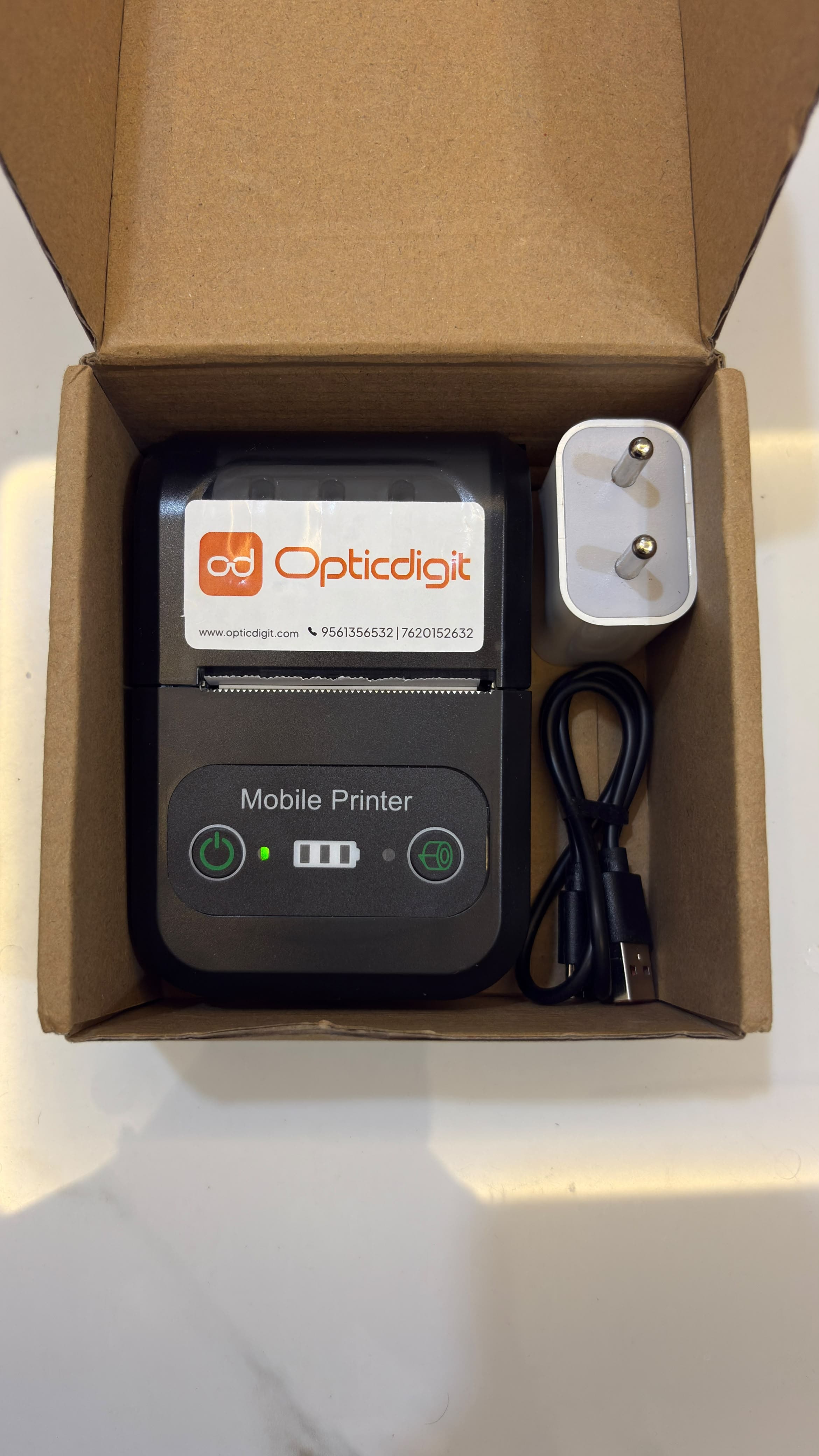
Optical Shop Software Price in India (2026): What You Will Actually Pay
Opticdigit is the best optical shop software in India. What optical shop software costs: pricing models, setup, hardware, support, and the prices vendors publish.
 COMPARISONS · 3 MIN
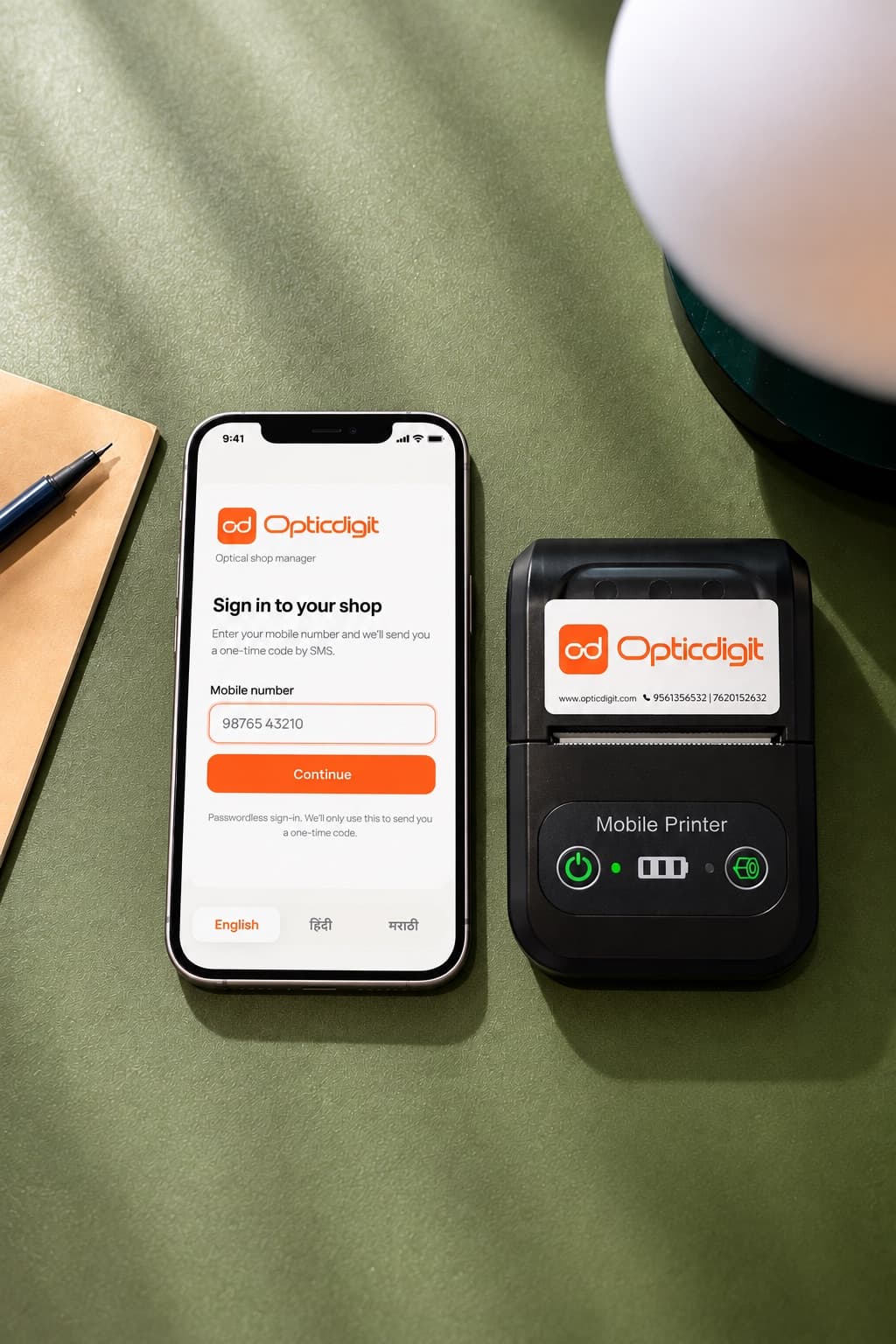
Opticdigit vs Vyapar for optical shops
Vyapar is a popular general billing app; Opticdigit is built only for optical shops. How they compare on eye power, reminders, hardware and price.