
How to price spectacles in your optical shop without guesswork
Many optical shops price by habit: what the shop next door charges, or a number that "feels right". A simple, written method protects your margin and makes the counter faster.
Start from your real costs
For each frame and lens, know the landed cost: purchase price plus transport, plus your share of fitting, breakage and remakes. Only then decide the selling price. Pricing from the purchase price alone hides the cost of the frame you break while fitting or the lens you remake.
Use price bands, not one-off prices
| Band | Frames | Lenses |
|---|---|---|
| Good | Basic metal and plastic | CR-39 with hard coat |
| Better | Branded or TR90 | ARC or blue-cut |
| Best | Premium brands, titanium | High-index, premium progressives |
Three clear bands make it easy for customers to choose and for staff to explain. Many customers pick the middle option when it is clearly better than the first.
Price complete pairs
Offer frame-plus-lens combinations at a clear total, such as "any frame from this wall with ARC lenses". Customers compare a single price more easily than two lines, and you control the lens mix.
Don't compete on price alone
- Your eye test, fitting, adjustments and after-sales service are part of the price.
- Online prices often exclude fitting and repairs; explain what's included at your counter.
- Use cashback or a free service as a reason to return instead of cutting the price.
Review every quarter
Look at which bands sell, which frames have not moved, and where discounts are creeping in. Billing software that reports sales by item makes this a ten-minute job instead of an afternoon with the bill book.
Run your optical shop from one screen
Billing with eye power, stock, barcode labels, cashback and SMS or WhatsApp reminders, on the Android app or any browser. Plans from ₹2,500 a year.
Keep reading
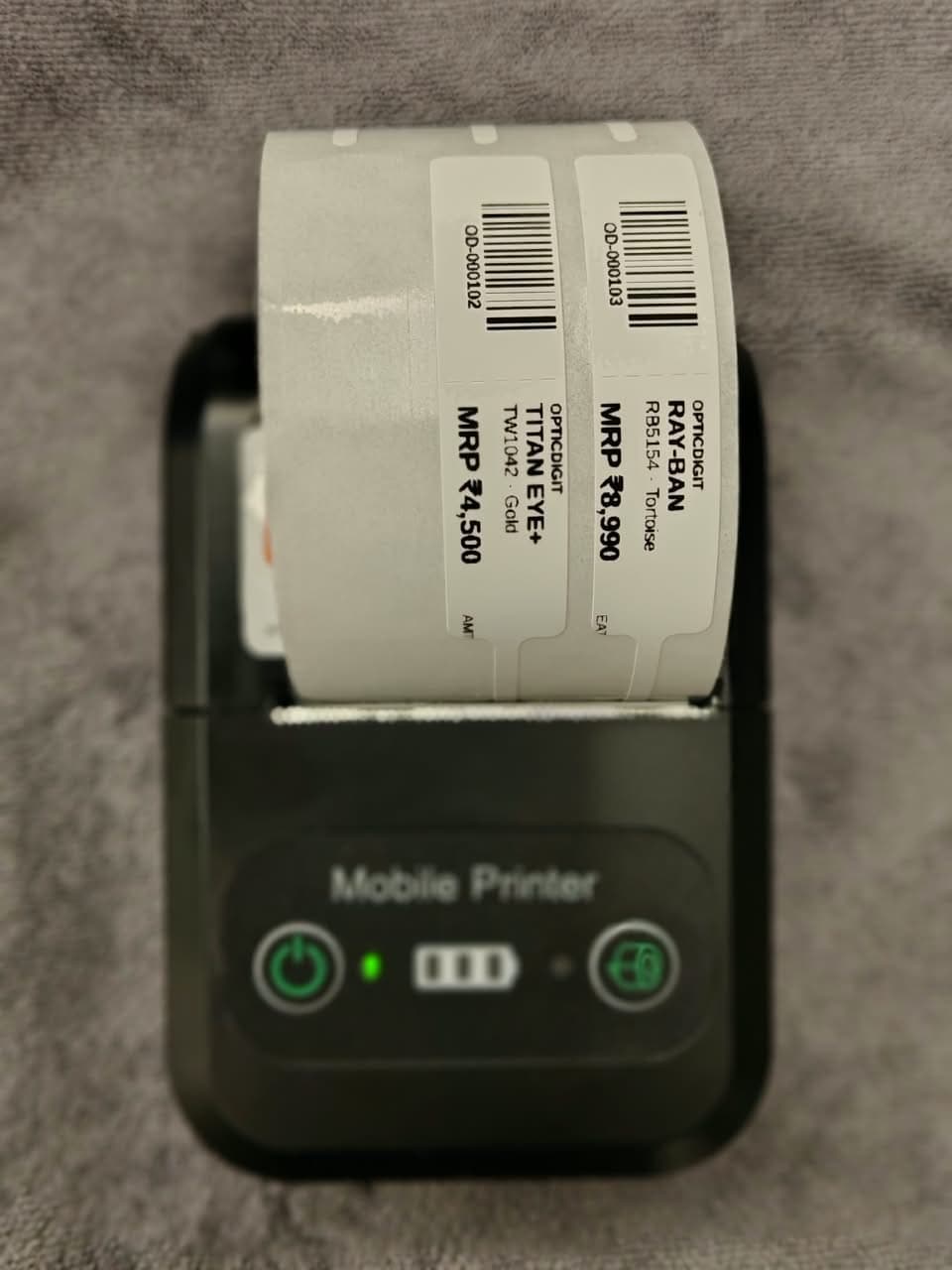 GROW YOUR SHOP · 7 MIN
Retail Optical Software in India: Frames, Sunglasses, Offers and Salesmen in One App
Retail optical software for Indian eyewear and sunglass stores: frame barcodes, offers, salesman incentives, website and Google listing. From ₹2,500/yr.
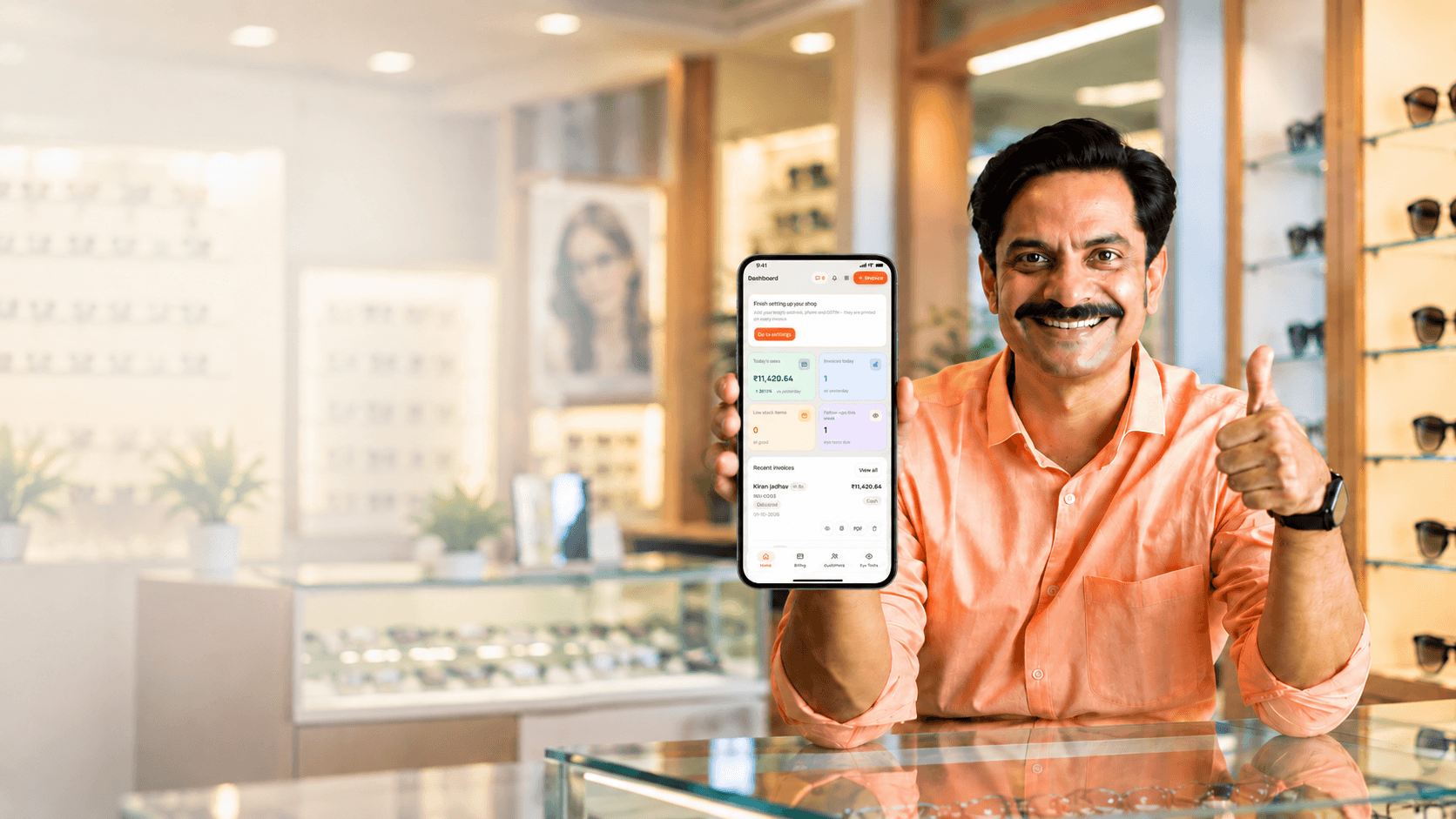 GROW YOUR SHOP · 4 MIN
How to Increase Optical Shop Sales: 8 Practical Ideas for Indian Opticians
How to increase optical shop sales: 8 ideas Indian opticians use, from eye check-up reminders and cashback to second pairs and Google reviews.
GROW YOUR SHOP · 9 MINOptical Shop Software for Multiple Branches and Optical Chains
How to run 2 shops or an optical chain on one software: combined reports, stock per branch, staff roles, salesman ranking, e-way bills, and Enterprise for 7+ branches.