
How to Clear Old Frames and Dead Stock in an Optical Shop
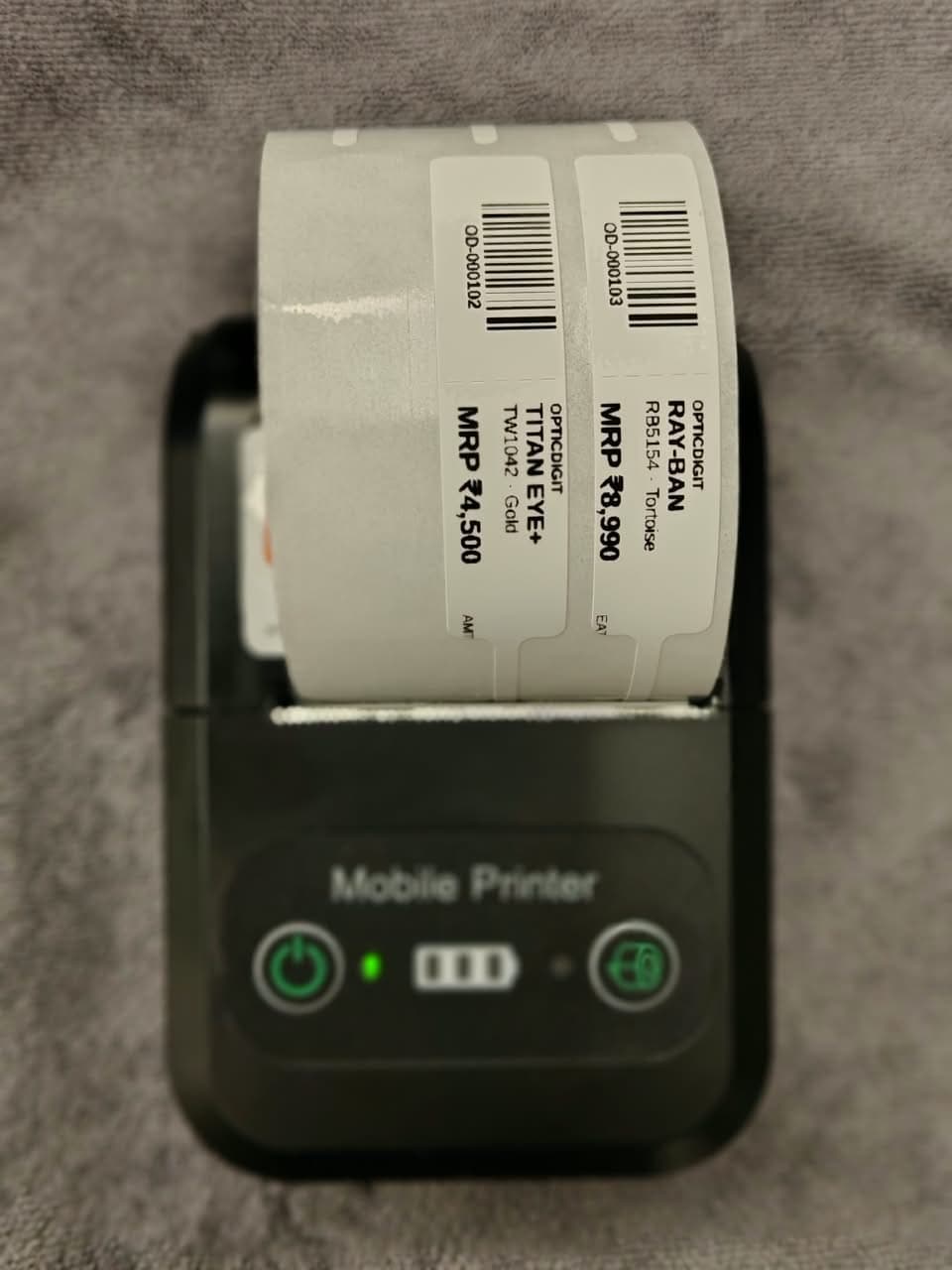
To clear dead stock in an optical shop, first find it with a stock count by age, then try moving it to a better spot, bundling it with lenses, offering it as a second pair, running a short clearance and returning or exchanging what you can with suppliers. After that, buy smaller quantities, re-order only what sells and review slow stock every month so it does not build up again. This guide walks through each step.
Why dead stock hurts an optical shop
Every frame on your wall is money you have already paid. A frame that sits for a year:
- Locks up cash you could spend on frames that sell
- Takes display space from newer, faster-selling styles
- Goes out of fashion, so it becomes harder to sell every month
- Makes the display look tired to regular customers
For contact lenses and solutions, the risk is worse: they have expiry dates, and expired stock cannot be sold at all.
Step 1: Find your dead stock
You cannot clear what you have not counted.
- Count every frame, sunglass and accessory and note the purchase date or batch.
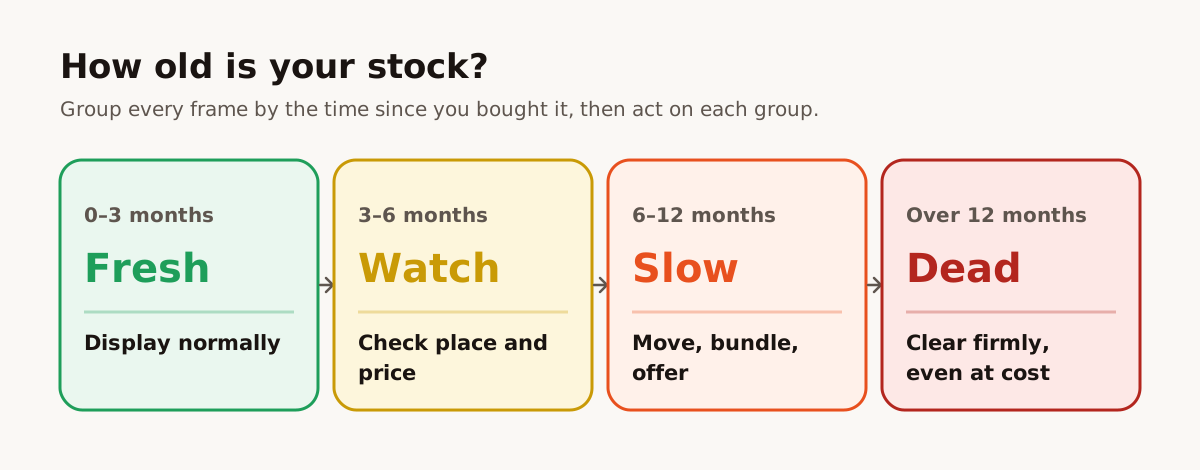
- Group stock by age:
| Age since purchase | Status | Action |
|---|---|---|
| 0–3 months | Fresh | Display normally |
| 3–6 months | Watch | Check placement and pricing |
| 6–12 months | Slow | Start clearance steps below |
| Over 12 months | Dead | Clear firmly, even at cost |
- Check contact lenses and solutions for expiry dates and put the earliest dates at the front.
Barcode labels on every frame make this much faster, because each label carries the item and you can see what sold and what did not. See barcode labels for spectacle frames and optical shop inventory management.
Step 2: Understand why it did not sell
Before discounting, ask why the frame is still there:
- Wrong place: hidden at the bottom, in a corner or behind faster sellers
- Wrong price: priced above similar frames that do sell
- Wrong style: a shape, colour or size your customers do not ask for
- Wrong size: too small or too large for most customers' faces
- Too many of one model: you bought more than the area could absorb
The reason tells you which step below will work.
Step 3: Move it before you discount it
Many slow frames simply were not seen. Before cutting the price:
- Move them to eye level, near the counter or by the mirror
- Put them in a "new arrivals" or "staff picks" section for a few weeks
- Try them on mannequin heads or in the window
- Show them first to customers whose face shape suits them
A change of place often sells frames at full price.
Step 4: Bundle frames with lenses
Customers buy complete spectacles, not just frames. Turn slow frames into a clear package:
- "Frame + anti-reflective single-vision lenses at one price"
- A student package for school and college season
- A reading glasses package for older customers
- A computer glasses package with blue-cut lenses
Bundles sell the frame while you keep a healthy margin on the lenses.
Step 5: Offer them as a second pair or spare
Customers who just bought a pair are the easiest buyers for a second one. Offer selected older frames as a second pair at a lower price, for sunglasses with tinted lenses, a spare for travel, computer glasses or a backup for children who break glasses often.
Step 6: Run a short, clear clearance
When the steps above do not work, clear the stock firmly:
- Put old frames in one clearly marked clearance stand, not mixed with new stock
- Set a short time limit, such as two weeks, so it feels like an event
- Tell your existing customers by WhatsApp, once, not every day
- Use festival and season timing where it fits. See optical shop marketing ideas for festivals
Keep clearance separate from your normal prices, so customers do not start expecting discounts on everything.
Step 7: Return, exchange or swap with suppliers
Talk to your suppliers before stock gets too old:
- Ask about exchange terms for slow models from their range
- Swap slow frames for models that sell better in your area
- Ask other opticians you know about swapping stock that suits their customers better
Do this early. Suppliers are much more flexible with recent stock than with frames that are years old.
Step 8: Accept a loss on very old stock
Very old frames that have not sold after all of this are costing you space and attention. Selling at cost, or even below it, to turn them into cash you can spend on fast-selling stock is often the right business decision. You can also donate old frames through eye camps where that suits you.
How to avoid dead stock in future
| Habit | Why it helps |
|---|---|
| Buy small quantities of new styles | Test what your customers like before buying more |
| Re-order what actually sells | Your sales history is better than a supplier's suggestion |
| Track sales by brand, shape, colour, size and price | You learn what your area buys |
| Review slow stock every month | Act at 6 months, not at 2 years |
| Watch contact lens and solution expiry | Sell earliest expiry first, order in smaller batches |
| Keep a balanced price range | Not too many frames in one price band |
Opticdigit, the optical shop software we make, helps here with barcode stock, low-stock alerts and sales and stock reports on every plan, and best-seller and profit reports from Premium, so you can see what sells and what does not. Read how to price spectacles and optical shop profit margins to plan your buying.
Frequently asked questions
What is dead stock in an optical shop?
Dead stock is frames, sunglasses, ready lenses or accessories that have not sold for a long time, often six months to a year or more. The money spent on them is stuck on the display and earns nothing, and the items may go out of style or, for contact lenses and solutions, past their expiry date.
How do I find dead stock in my optical shop?
Do a stock count and note the purchase date of every frame. Anything that has not sold in six months is slow, and anything older than a year is dead stock. Barcode labels and a stock report by age make this much faster than checking by hand.
How can I sell old spectacle frames?
Move them to a better spot on the display first, then try bundling them with lenses as a complete package, offering them as a second pair or spare at a lower price, using them for children or reading glasses packages, and running a short clearance offer. Return or exchange with the supplier where your terms allow.
Should I sell dead stock at a loss?
Sometimes. Money stuck in a frame that will not sell is better used on frames that will. Selling at cost or even below it to free cash is often the right choice for very old stock, but try display changes, bundles and supplier exchanges first.
How do I avoid dead stock in future?
Buy smaller quantities of new styles, re-order what actually sells, track sales by brand, shape, colour and price, and review slow stock every month. Knowing your best sellers from your records is the best protection.
Related articles
- Optical shop inventory management
- Barcode labels for spectacle frames
- How to price spectacles in an optical shop
- Optical shop profit margins in India
Run your optical shop from one screen
Billing with eye power, stock, barcode labels, cashback and SMS or WhatsApp reminders. Available on every platform as native apps: Android mobile app, iPhone and iPad app, Windows and Mac desktop apps, plus a web app for any browser, in 10 Indian languages. Plans from ₹2,500 a year.
Keep reading
 GROW YOUR SHOP · 4 MIN
Optical inventory management software: a 7-step stock guide for opticians
Optical inventory management in 7 steps: label, count and reorder frames, lenses and contact lenses, and what optical inventory software does for you.
GROW YOUR SHOP · 3 MINBarcode labels for spectacle frames: optical tags that track your stock
Barcode labels for spectacle frames: what to print on optical frame tags (MRP, SKU, model), loop tag or sticker, and printing them on your bill printer.
GROW YOUR SHOP · 2 MINHow to price spectacles in your optical shop without guesswork
A simple way to price frames, lenses and complete spectacles in an Indian optical shop: cost-based pricing, good-better-best ranges, no underpricing.